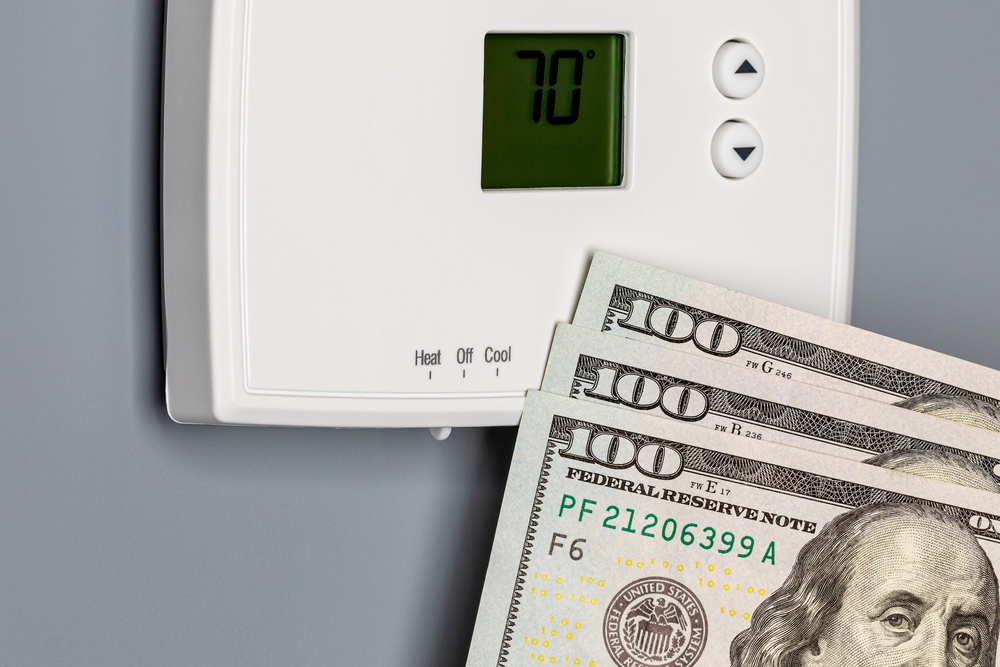

Summer in the East Valley means expensive utility bills. As the temperature climbs, so does the cost of keeping your home comfortable. Upgrading your thermostat is usually the first recommendation for cutting costs, but spending $150 to $250 on a wall-mounted gadget often makes many homeowners hesitate.
The short answer: Yes, smart thermostats are worth the investment. They typically reduce heating and cooling costs by 8% to 15%, paying for themselves in one to three years. By learning your schedule and using location tracking, they ensure you never pay to air-condition an empty house.
To figure out if that return on investment applies to your specific home, we need to skip the marketing hype. Here is a quick decision framework, the hard data on real savings, and the realistic drawbacks you need to know before buying.

The Quick Decision Framework
Don’t want to read the whole guide? Here is how to find out immediately whether this upgrade makes sense for you.
A smart thermostat is worth it if:
- You are away from home during the day for work or travel.
- You frequently forget to adjust the temperature before leaving.
- You have a standard single-stage or two-stage HVAC system.
- You want the convenience of a smartphone or voice control.
You should probably SKIP IT if:
- You work from home and occupy the house 24/7.
- You have a high-end “communicating” variable-speed HVAC system (like premium Trane or Carrier models).
- You prioritize strict digital privacy and prefer non-connected devices.
- You live in a very mild climate and rarely run your air conditioning.
The Pros: Why People Upgrade
Moving away from a manual dial fundamentally changes how your equipment operates and how you interact with your home.
1. Convenience and Remote Access
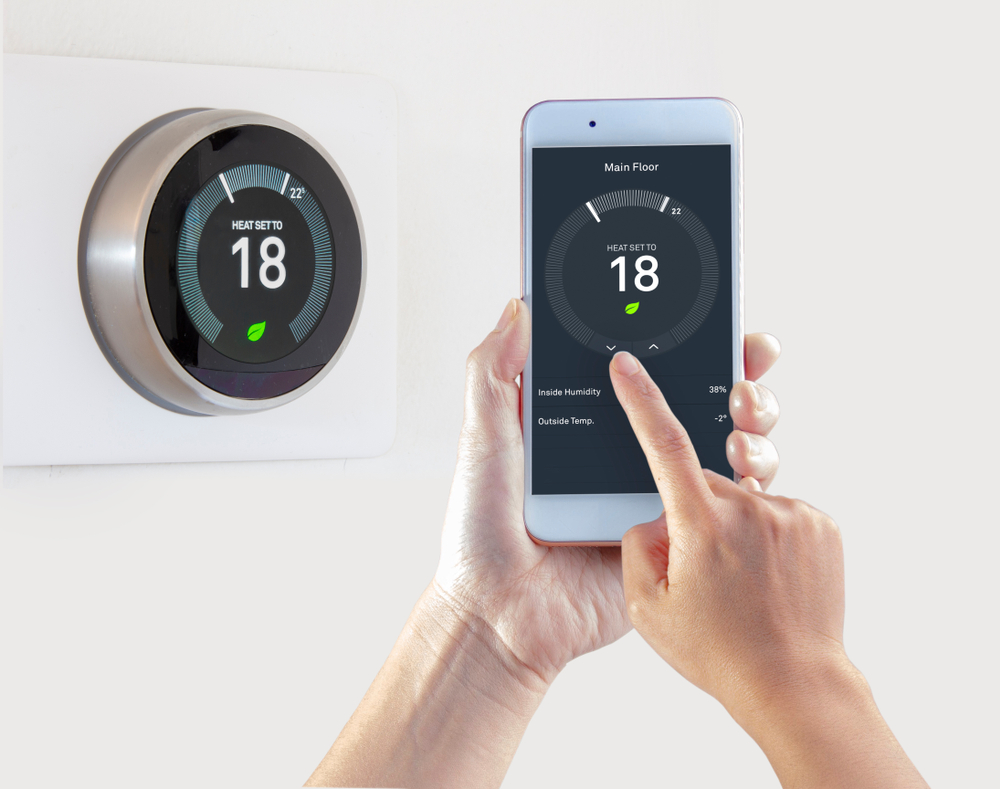
Control your home’s temperature from anywhere — arriving home to a perfectly cooled house without running the AC all day. Geofencing is the standout feature here: the companion app tracks your phone’s location, automatically raising the temperature to save money when you drive away, and cooling the house back down right before you pull into the driveway.
2. Energy Usage Insights
See exactly where your cooling dollars are going with monthly energy reports — then make one small change to see it on next month’s bill. You can compare your usage to previous months and see exactly where your money is going, making it easy to spot and fix wasteful cooling habits.
3. Equipment Protection
Constant stopping and starting, known as short-cycling, wears down air conditioning compressors. Advanced thermostats use precision sensors to maintain wider, more strategic temperature bands. By forcing the system to run in optimized, longer cycles, the thermostat reduces mechanical stress on your entire HVAC unit.
Real Savings: The Math Behind the ROI
If you leave the house for work and have a standard AC unit, upgrading makes financial sense.
According to federal energy data, homes utilizing certified smart climate control see an 8% to 15% reduction in annual HVAC costs.
Let’s look at the math for a typical Arizona home:
- If your summer cooling bill is $300 a month, a 15% reduction saves you $45 a month.
- Over an entire year of heavy summer cooling and winter heating, these reductions can easily add up to $300 to $500 in annual savings.
- At that rate, a $200 thermostat pays for itself in less than 8 months.
Don’t forget local utility rebates: You rarely have to pay retail prices. Local providers like SRP and APS heavily incentivize energy efficiency, frequently offering instant rebates of $50 to $100 when you purchase a qualifying model through their marketplaces.
Smart vs. Programmable vs. Manual
| Feature | Manual Dial | Programmable | Smart Thermostat |
|---|---|---|---|
| Adjusts Temp Automatically | No | Yes (Fixed Schedule) | Yes (Adapts to Routine) |
| Smartphone App Control | No | No | Yes |
| Energy Usage Reports | No | No | Yes |
| Geofencing (Location tracking) | No | No | Yes |
| Average Upfront Cost | $15 – $30 | $30 – $75 | $130 – $250+ |
The Cons and Compatibility Warnings
This technology isn’t flawless. You need to know the technical limitations before removing your old unit.
The Upfront Cost
Even with utility rebates, you are spending noticeably more upfront compared to a $30 programmable model at a hardware store.
The “C-Wire” Requirement
Smart thermostats have bright screens and constant Wi-Fi connections, meaning they require a dedicated, continuous 24-volt power supply. This is delivered via a Common Wire (C-wire). Older homes in Mesa often lack this wire in the wall. While adapters exist, incorrectly wiring them to your furnace control board can cause electrical shorts.
The Communicating System Trap
If you have a high-end, variable-speed HVAC system, the outdoor unit and the indoor thermostat “talk” to each other constantly to maximize efficiency. Replacing a proprietary communicating thermostat with a standard smart model will often force your expensive system to run like a basic, single-stage unit, destroying the efficiency you paid for.
Frequently Asked Questions
Do smart thermostats work without Wi-Fi?
Yes. If your internet goes down, the device continues to run your heating and cooling based on its last known schedule. You can also adjust it manually by tapping the screen. However, you will temporarily lose app control and geofencing.
Do they really save money in extreme heat like Arizona?
Absolutely. In extreme climates, AC units consume massive amounts of electricity. Because the total energy spent is so high, optimizing run-times by even 10% results in much larger dollar-amount savings than it would in a mild, coastal climate.
Final Verdict
For homeowners with standard HVAC wiring who spend part of their day away from the house, a smart thermostat is a highly logical, cost-effective upgrade. The energy savings, convenience, and equipment protection justify the initial price tag. However, if you work from home full-time or own a highly complex, variable-speed heat pump, you should consult with a technician before making the switch.
You should consult with a technician before making the switch. If you are ready to explore your options, our trusted team at PlumbSmart is just a call away for all your East Valley HVAC needs.