
If you live in the Valley, you already know the drill: you dust the living room on a Tuesday, and by Thursday, there’s a new layer of grit on the coffee table. Between the haboobs, seasonal allergies, and the constant cycling of our AC units during 115°F summers, indoor air quality (IAQ) isn’t just a luxury but also a fundamental part of home health.
But when it comes to upgrading your home’s air, homeowners usually hit a roadblock: Should you invest in a whole-house air purifier or a UV light system? The quick answer: Air purifiers are mechanical filters built to physically trap airborne particles like dust, pollen, and pet dander. UV light systems are biological neutralizers designed to kill or “deactivate” living microorganisms like bacteria, viruses, and mold spores inside your ductwork. In this guide, we will go beyond the generic recommendations to really explore the engineering and health science behind these systems.How Air Purifiers Work
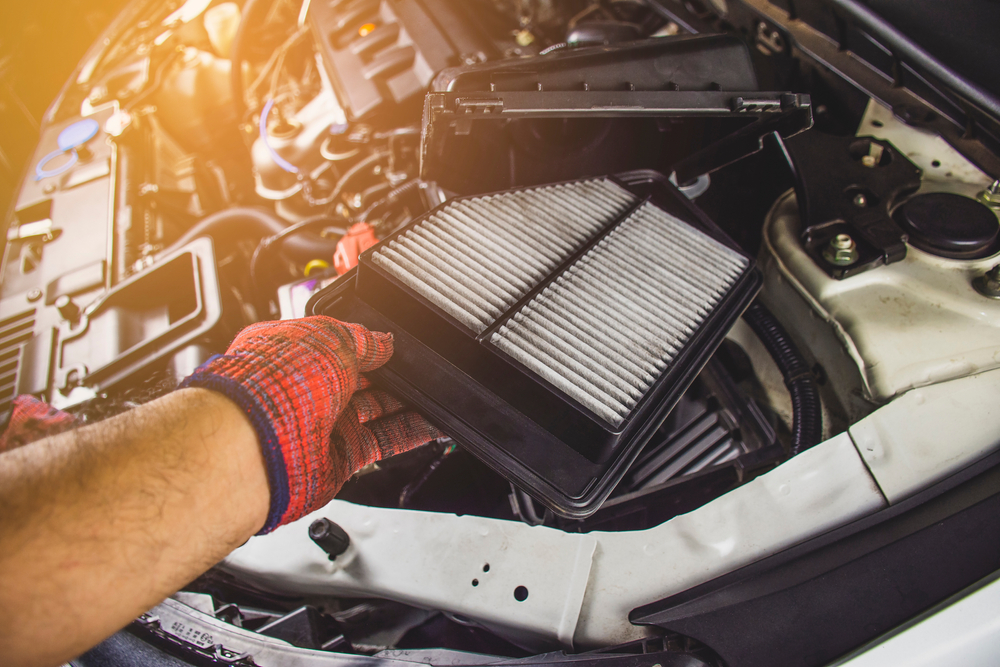
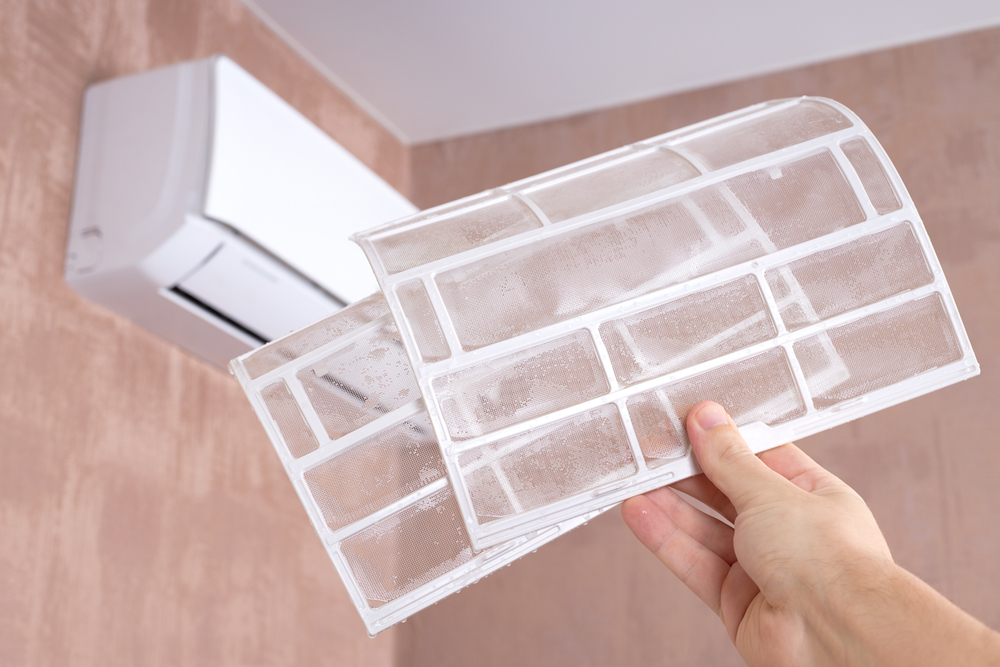
An air purifier is a mechanical filtration system. It works by forcing your home’s air through a dense web of fibers that “trap” particles as they pass through. In a whole-home setup, these are typically installed directly into your return air duct, cleaning every cubic foot of air before it ever reaches your living spaces.The Functionality Of HEPA Filters & Other Filters
The effectiveness of an air purifier is measured by its MERV (Minimum Efficiency Reporting Value) rating.- Standard Pleated Filters (MERV 8-11): Good for basic dust and lint, but they often miss smaller allergens like pet dander or smoke.
- High-Efficiency Filters (MERV 13-16): These are the residential “sweet spot.” According to the Environmental Protection Agency (EPA), filters at this level are significantly more effective at capturing fine particles, including some bacteria and virus-carrying droplets.
- HEPA Filters: These are the maximum gold standard since the filter captures 99.97% of particles as small as 0.3 microns. The thing is, while incredibly effective, they are very dense.
How UV Lights Work
Think of a standard air purifier like a physical net; it’s there to catch the big stuff. UV systems play a different game entirely. They don’t “trap” particles at all. Instead, they use electromagnetic energy to scramble the biological blueprints of microscopic threats.Types Of UV Light Systems For Your Home
Most modern HVAC setups use UV-C light, which is a specific germicidal frequency. Research from ASHRAE confirms that this type of energy essentially shatters the DNA of microorganisms. Once their genetic code is broken, they can’t reproduce or cause infections, effectively “deactivating” them before they ever hit your lungs. Not every light is installed for the same reason. Here’s how we usually break them down:- Coil-Sterilization Lights: These run 24/7 and stay pointed right at your AC’s evaporator coil. If you live in a desert climate, this is a lifesaver. Because that coil is constantly damp, it’s a magnet for mold and that nasty “white slime” (biofilm) that eventually clogs your drain lines.
- Air-Sterilization Systems: These go directly into the ductwork to treat air while it’s moving. Because the air is traveling fast, these bulbs are much higher intensity. They’re designed to zap pathogens in the blink of an eye as they zip past.
Beyond The Sneezing: How Air Quality Hits Your Brain
Improving your indoor air quality (IAQ) isn’t just about stopping a runny nose—it’s actually a major factor in how your brain functions and recovers.Deeper Sleep, Fewer “Micro-Awakenings”
A study published by the National Institutes of Health (NIH) has highlighted a direct link between high CO2 levels (and particulate matter) and broken sleep. When your air is “heavy” with pollutants, it can trigger minor airway inflammation while you sleep. This often leads to “micro-awakenings”—tiny interruptions in your sleep cycle that you won’t even remember the next day, but that leave you feeling drained by noon.The 101% Cognitive Boost
It sounds like a marketing gimmick, but this report from the Harvard T.H. Chan School of Public Health is pretty staggering. They tracked workers in “Green+” buildings—spaces with high-performance ventilation and low chemical off-gassing (VOCs). The result? Those in the cleaner environments showed cognitive scores between 61% and 101% higher than those in standard buildings. When your brain isn’t busy processing pollutants, it has more energy for high-level strategy and crisis response.Air Purifiers vs. UV Light Systems: Key Differences Explained
Understanding the strengths of each helps you avoid overspending on the wrong technology.Air Purifiers: Best For Particle Filtration
If your primary goal is to reduce the “dust layer” on your furniture or stop sneezing due to pet dander and pollen, a whole-home air purifier is your winner. It is a physical barrier that removes mass from the air.UV Light Systems: Best for Germs, Mold, and Pathogens
If you are concerned about the spread of viruses, chronic mold issues, or “dirty sock syndrome” (odors caused by bacterial growth on your AC coils), UV lights are the superior choice.Portable vs. Whole-Home Air Purifiers
When choosing an air purification setup, homeowners usually weigh portable room units against integrated whole-home systems.- Portable: Great for a single bedroom or “spot” cleaning, but they don’t address the air in the rest of the house.
- Whole-Home: Integrated into your HVAC. It’s more cost-effective in the long run, stays out of sight, and treats every room simultaneously.
A Top Recommendation: The HALO-LED™ Whole-Home Air Purifier
When you realize you need a comprehensive solution rather than a clunky room unit, we highly recommend the HALO-LED™ in-duct air purifier. Unlike traditional passive systems that wait for pollutants to pass through a filter, the HALO-LED uses revolutionary REME-LED® technology to proactively disperse low levels of airborne hydrogen peroxide and ions throughout your living space. This actively neutralizes viruses, bacteria, mold spores, and odors at the source—before they even reach your return vents. Plus, it’s built with your health and energy bills in mind. The HALO-LED is completely mercury-free and verified zero-ozone. It also features an integrated airflow switch that turns on and off with your HVAC blower, saving energy and extending the life of the LED cell. Curious about what it takes to upgrade your home’s air quality? Watch our team install the HALO-LED system directly into a home’s HVAC ductworkCan You Use Both Together?
Yes—and you should. In fact, UV lights perform better when paired with a good air purifier. Dust and debris in the air can actually “shield” germs from UV rays (a phenomenon called shadowing). By filtering out the dust first, the UV light can strike pathogens with 100% efficiency.Maintenance, Energy Use & Cost Considerations
When choosing between an air purifier and a UV light system, it’s important to factor in maintenance and energy use.| Feature | Air Purifier | UV Light System |
|---|---|---|
| Maintenance | Replace filters every 6-12 months | Replace bulb every 12-24 months |
| Energy Use | Minimal (unless using a high-MERV filter) | Equivalent to a 20W-60W bulb |
| Target | Dust, Dander, Smoke, Pollen | Viruses, Bacteria, Mold, Slime |
| System Impact | Can strain older blower motors | No impact on airflow |
The PlumbSmart Difference: Why The “Plumbing Connection” Matters
Most HVAC companies only look at your air. At PlumbSmart, we see the whole home. In Arizona, your AC produces gallons of condensation daily. This water flows into a drain pan and out through a plumbing line. When bacteria grow on your AC coils, they create a sludge that clogs these drain lines. This is a plumbing disaster waiting to happen. A clogged line leads to flooded ceilings and massive repair bills. By installing a UV-C light, we don’t just clean your air—we protect your plumbing by preventing the “white slime” that causes these floods.When To Hire a Professional For Installation
IAQ systems are not DIY projects. Improperly installed UV lights can damage your eyes or degrade the plastic components of your HVAC system. Similarly, a filter that is “too good” for your blower motor can cause your AC to freeze up and fail in the 110-degree heat.What Our Clients Are Saying
“We use PlumbSmart for everything from plumbing, heating, and cooling, and their remodeling Service. They are always on time, ready to go to work, and always available to answer my questions, no matter how small they may be.” — Lisa Schnaidt
"I had a great experience with PlumbSmart! They explained everything clearly, didn’t try to upsell unnecessary services, and made sure the job was done right.” — April Castillo
“I am not one to give reviews; however, PlumbSmart has come through for me since 2019 on 3 properties. Professional, answer their phone, schedule appointments in a timely manner, and get the job done right even in difficult situations” — Sandra Coleman
Ready For a Healthy Home?
PlumbSmart is a family-owned, award-winning leader and trusted Plumbing, Heating & Air Conditioning Experts in plumbing, air purifier systems, UV light systems, and HVAC. We offer professional consultations and the guaranteed lowest prices in the Valley. Whether you need a simple filter upgrade or a high-tech UV sterilization system, we provide the expertise to get it done right. Contact us now!Frequently Asked Questions
What is the main difference between an air purifier and a UV light system?
Air purifiers act as a physical net, using filters to trap airborne particles like dust, pollen, and pet dander. UV light systems, on the other hand, use electromagnetic energy to deactivate biological threats like bacteria, viruses, and mold inside your ductwork.
Can I use both an air purifier and a UV light system in my home?
Yes, and you should! They actually perform better together. By using an air purifier to filter out dust and debris first, you prevent those particles from shielding germs, allowing the UV light to strike pathogens with 100% efficiency.
How often do I need to maintain my air purifier and UV light system?
Whole-home air purifier filters generally need to be replaced every 6 to 12 months, depending on the filter’s MERV rating and your home’s environment. UV light system bulbs typically require replacement every 12 to 24 months.
Why is a UV light system important for my home’s plumbing in Arizona?
AC units produce gallons of condensation daily. If bacteria are allowed to grow on the AC coils, it creates a “white slime” that can clog your plumbing drain lines and lead to flooded ceilings. A UV-C light prevents this biological growth, protecting both your air quality and your plumbing.